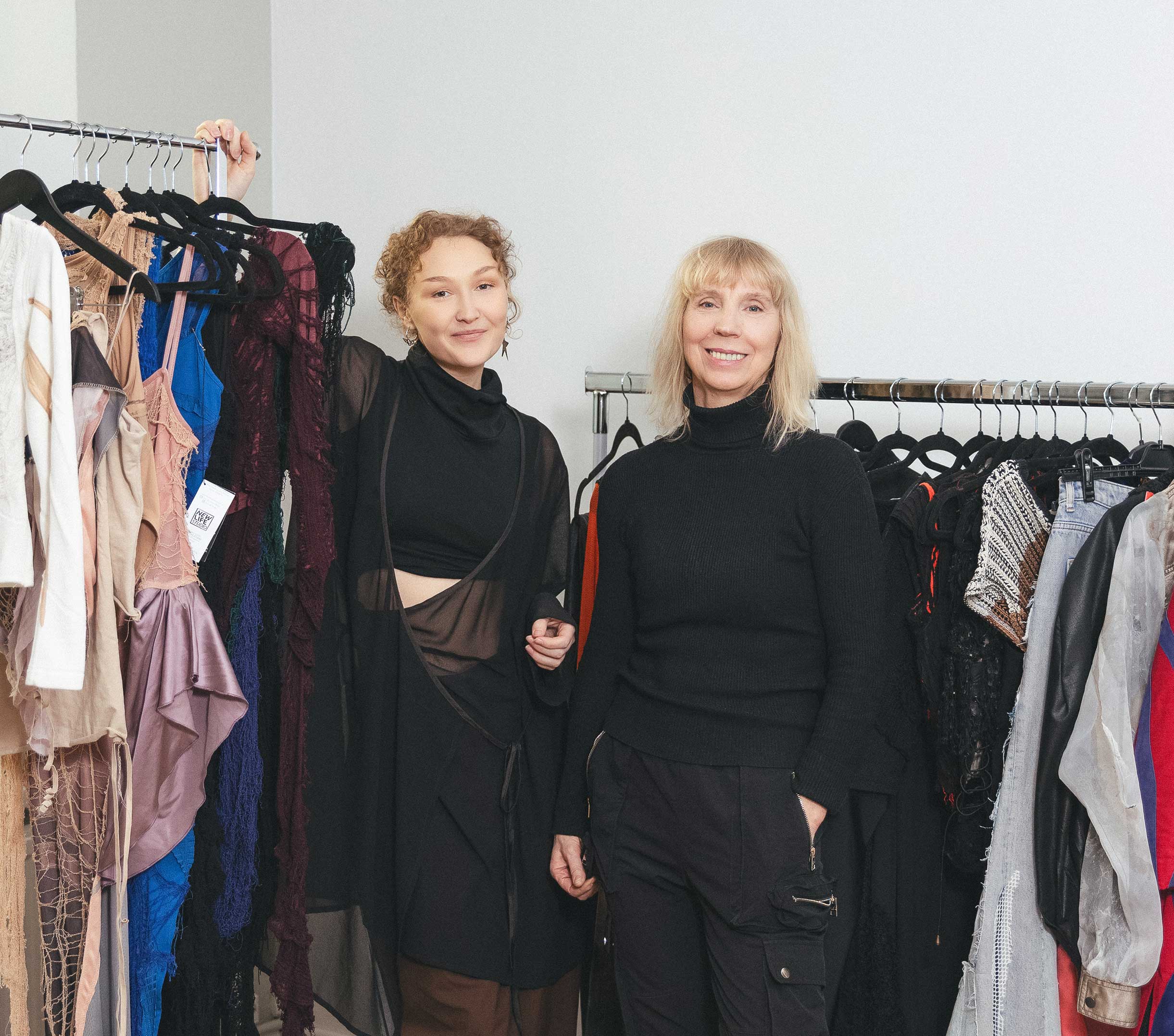
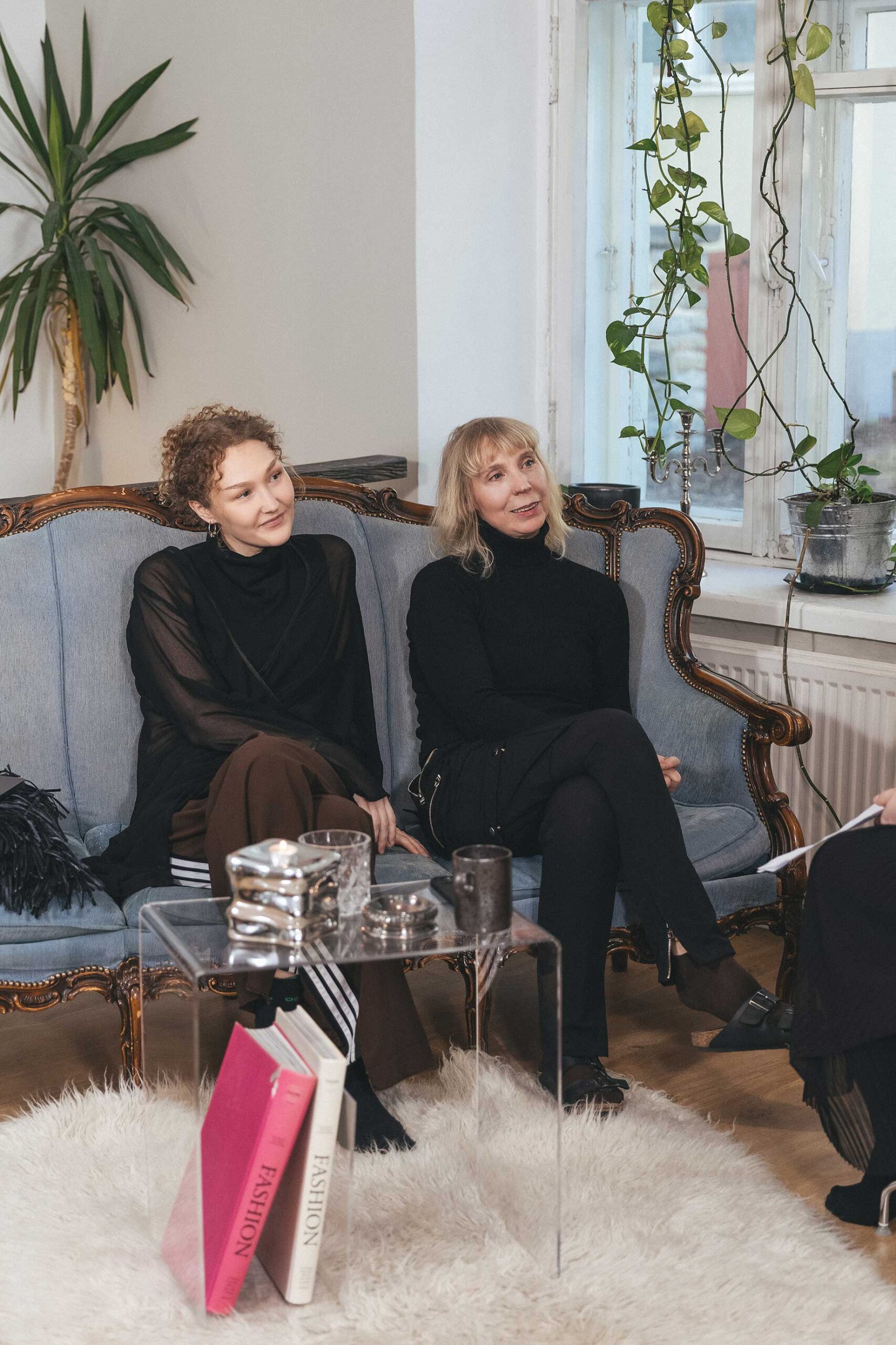
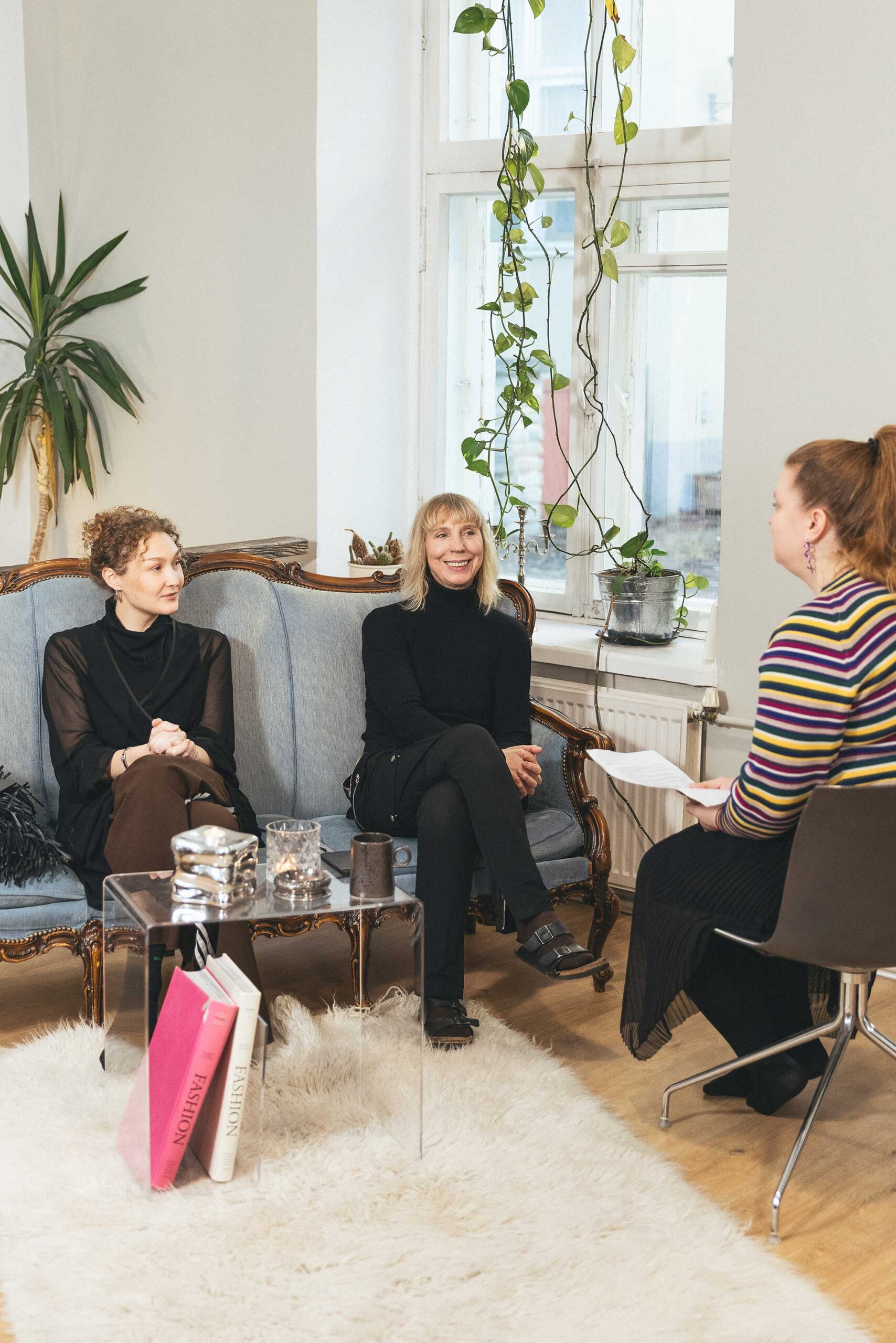
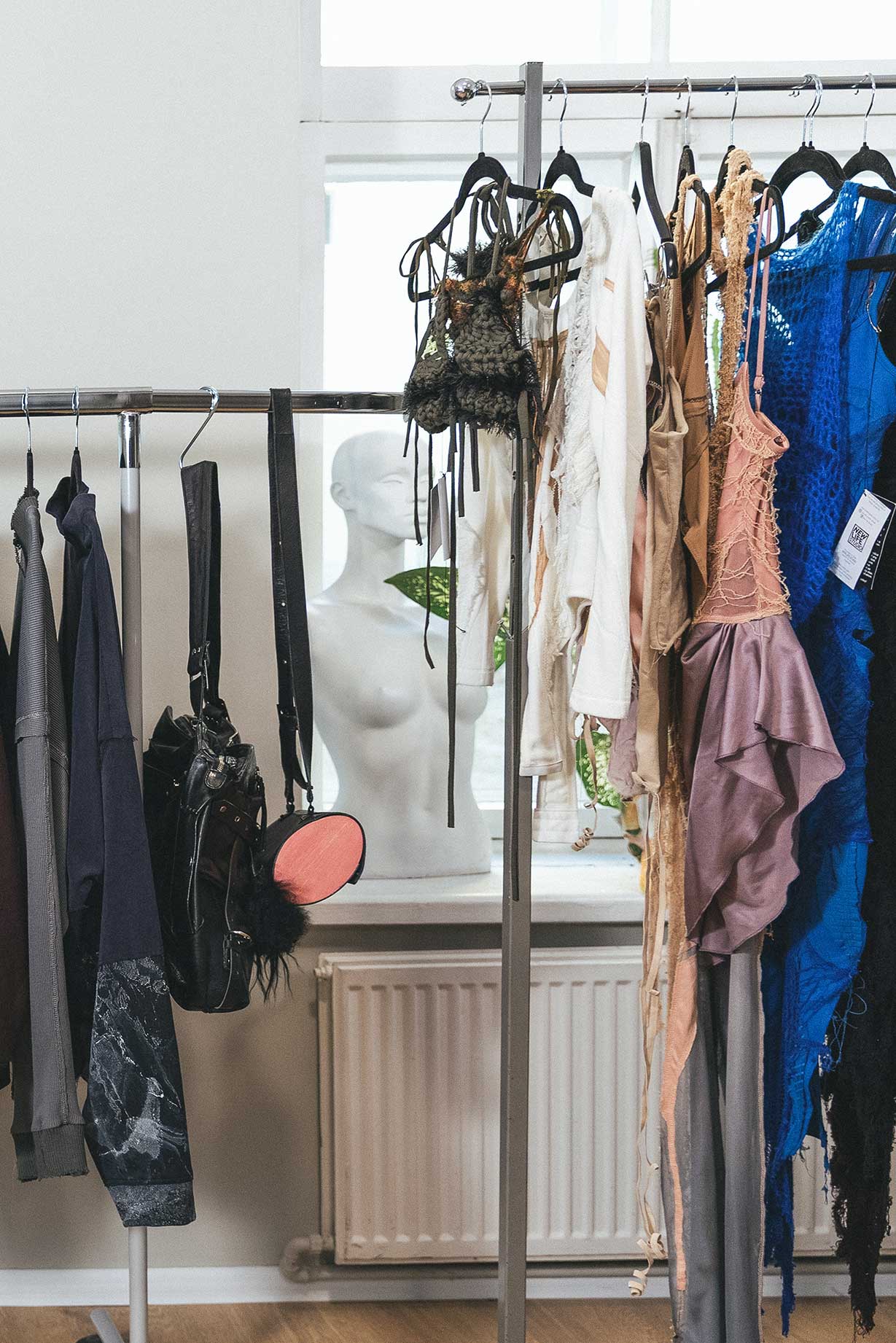
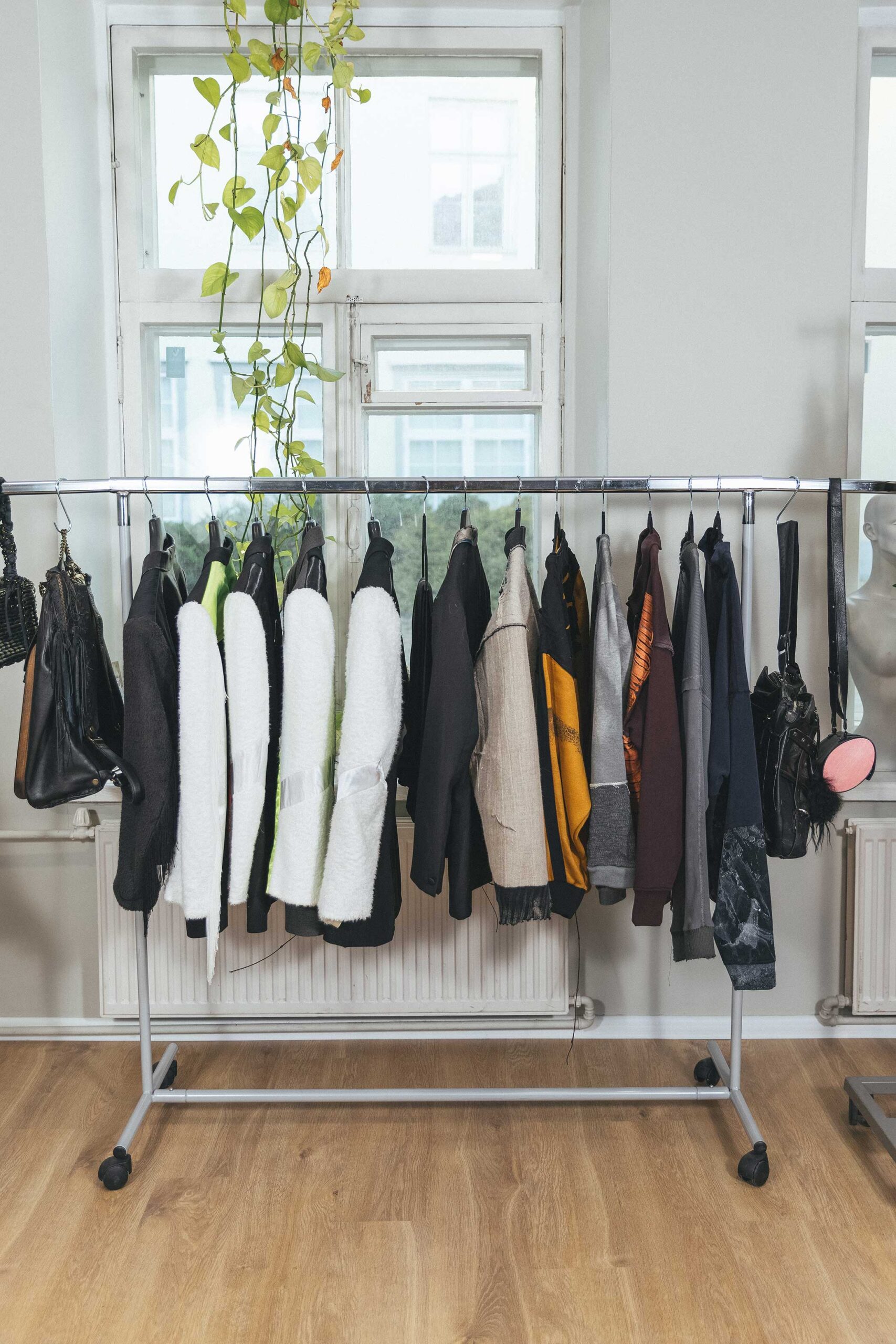
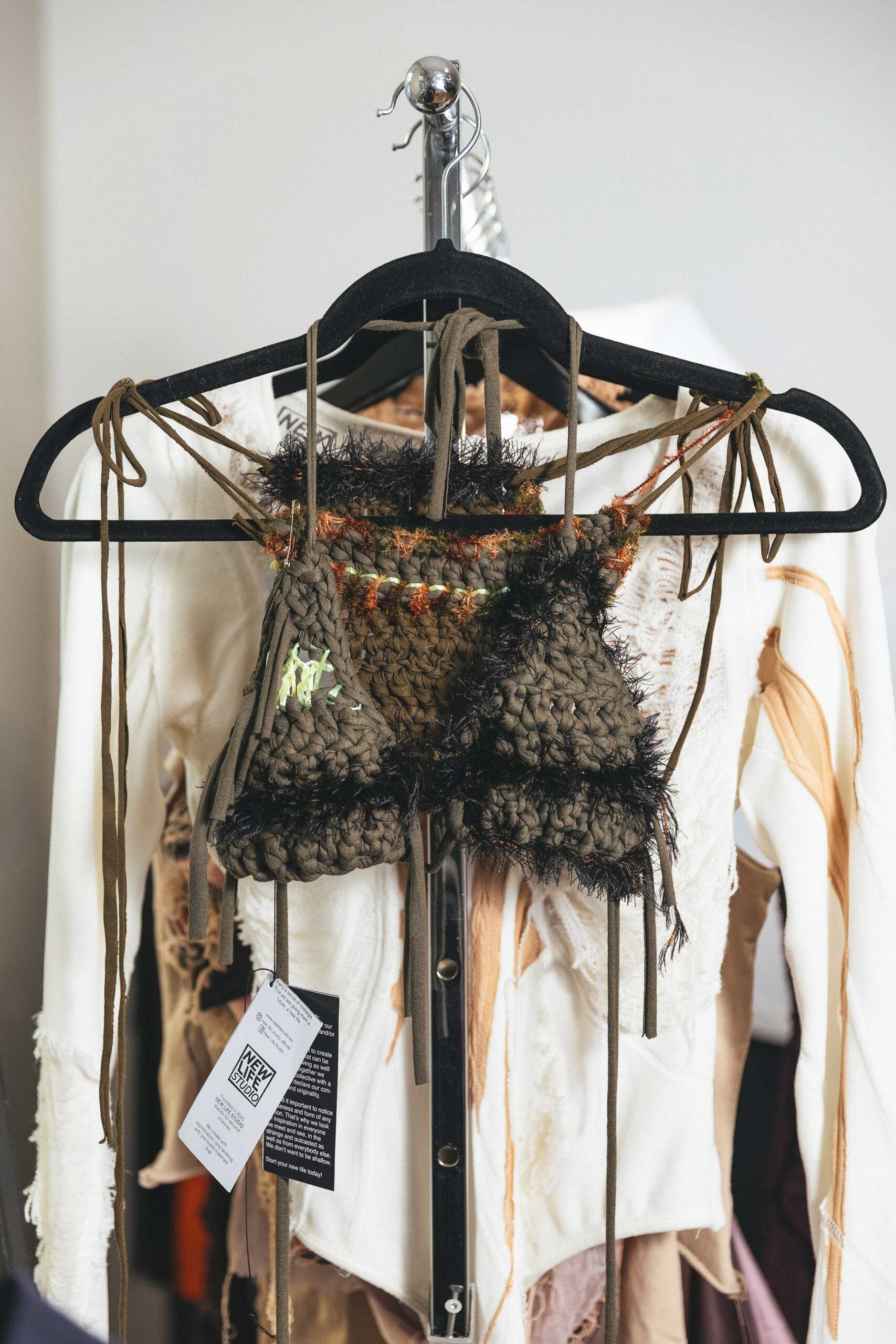
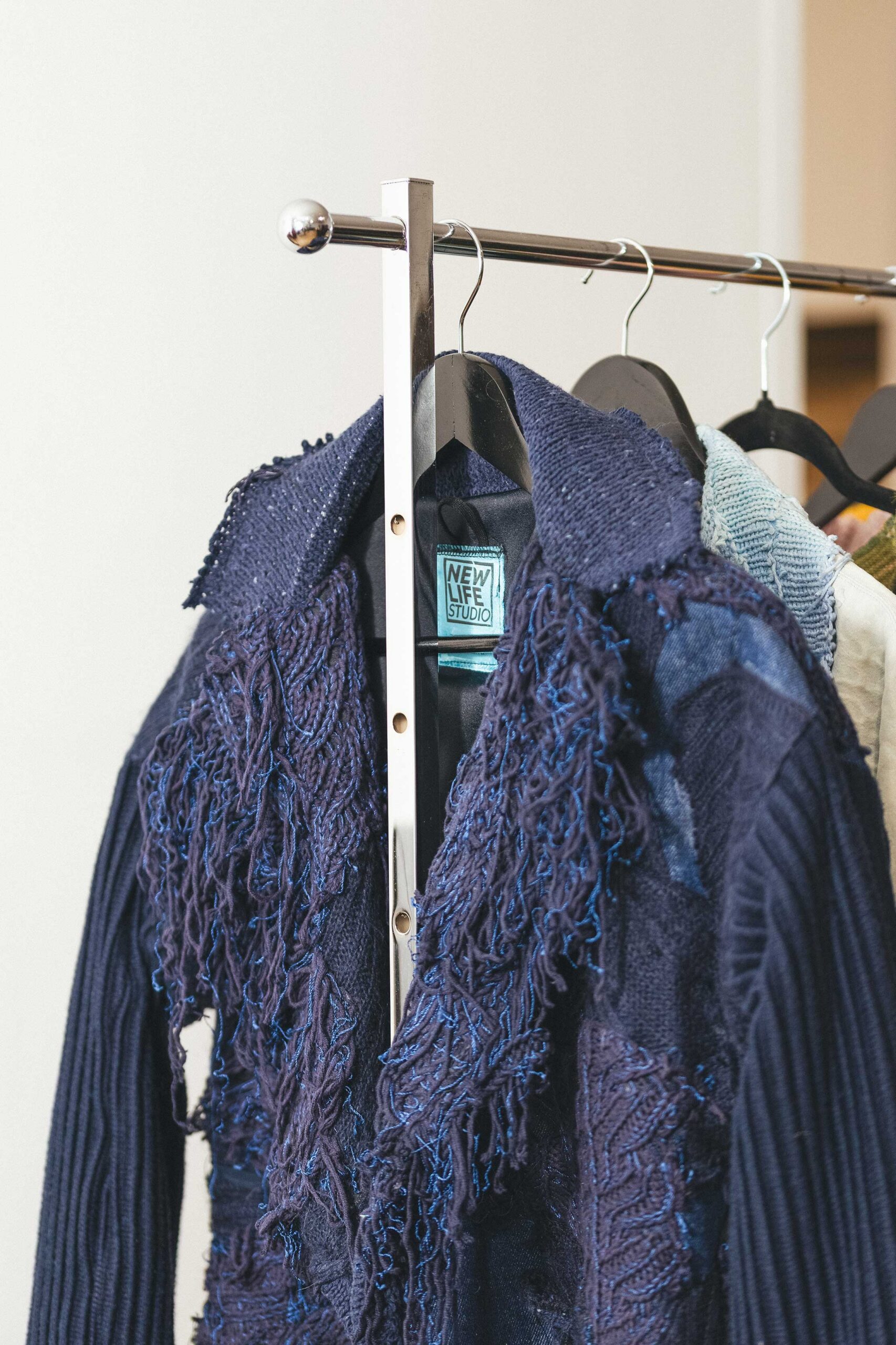
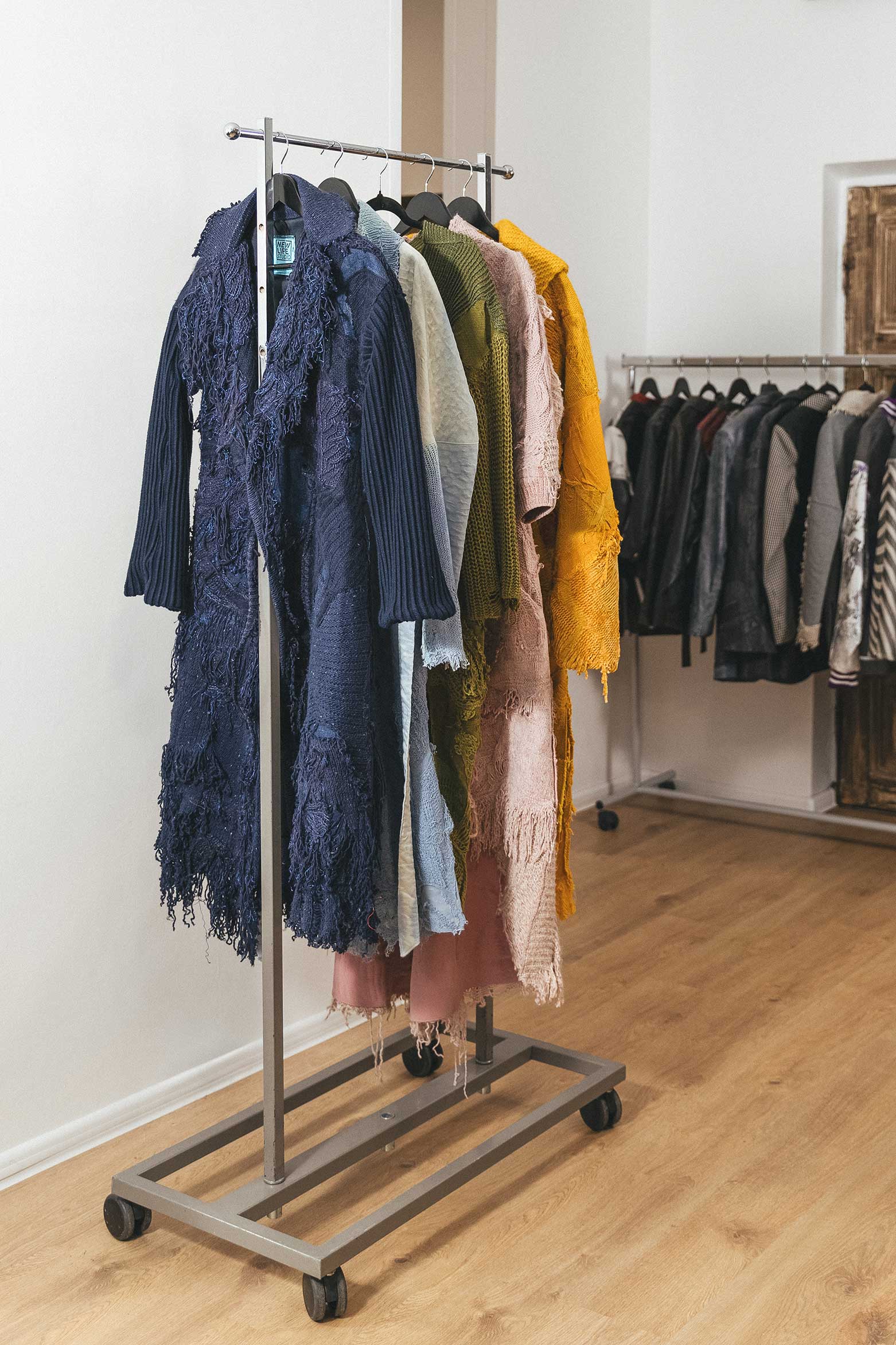
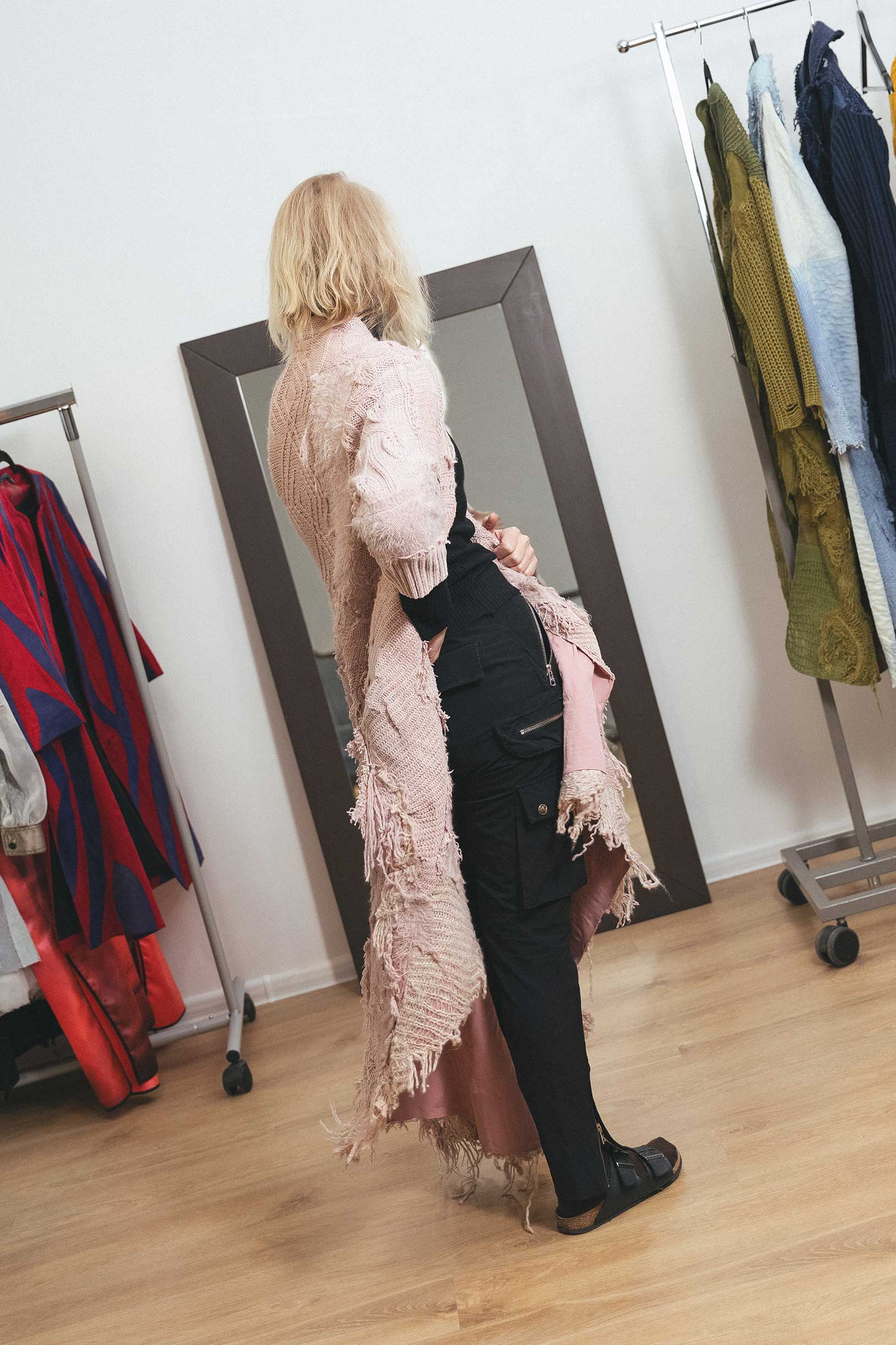
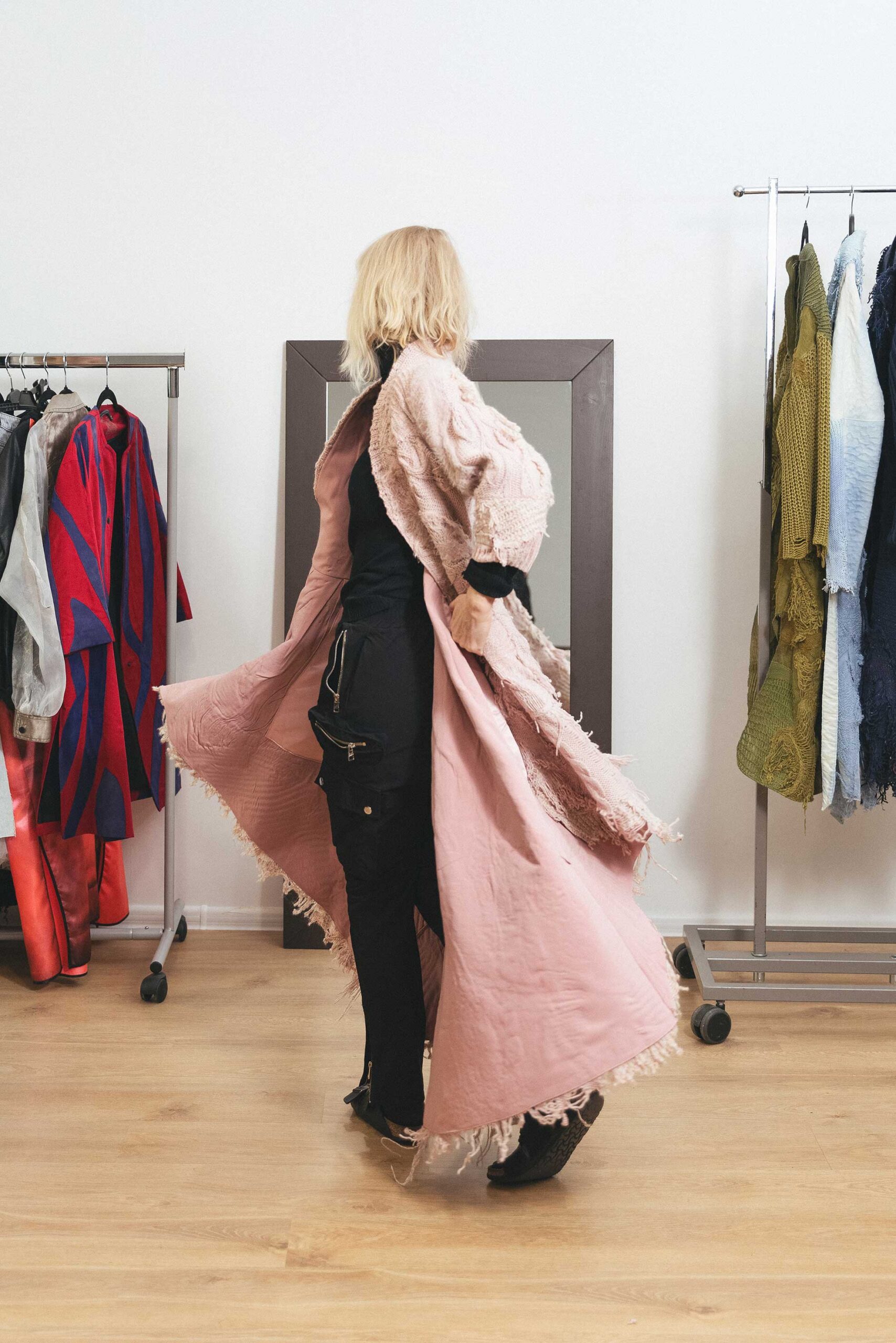
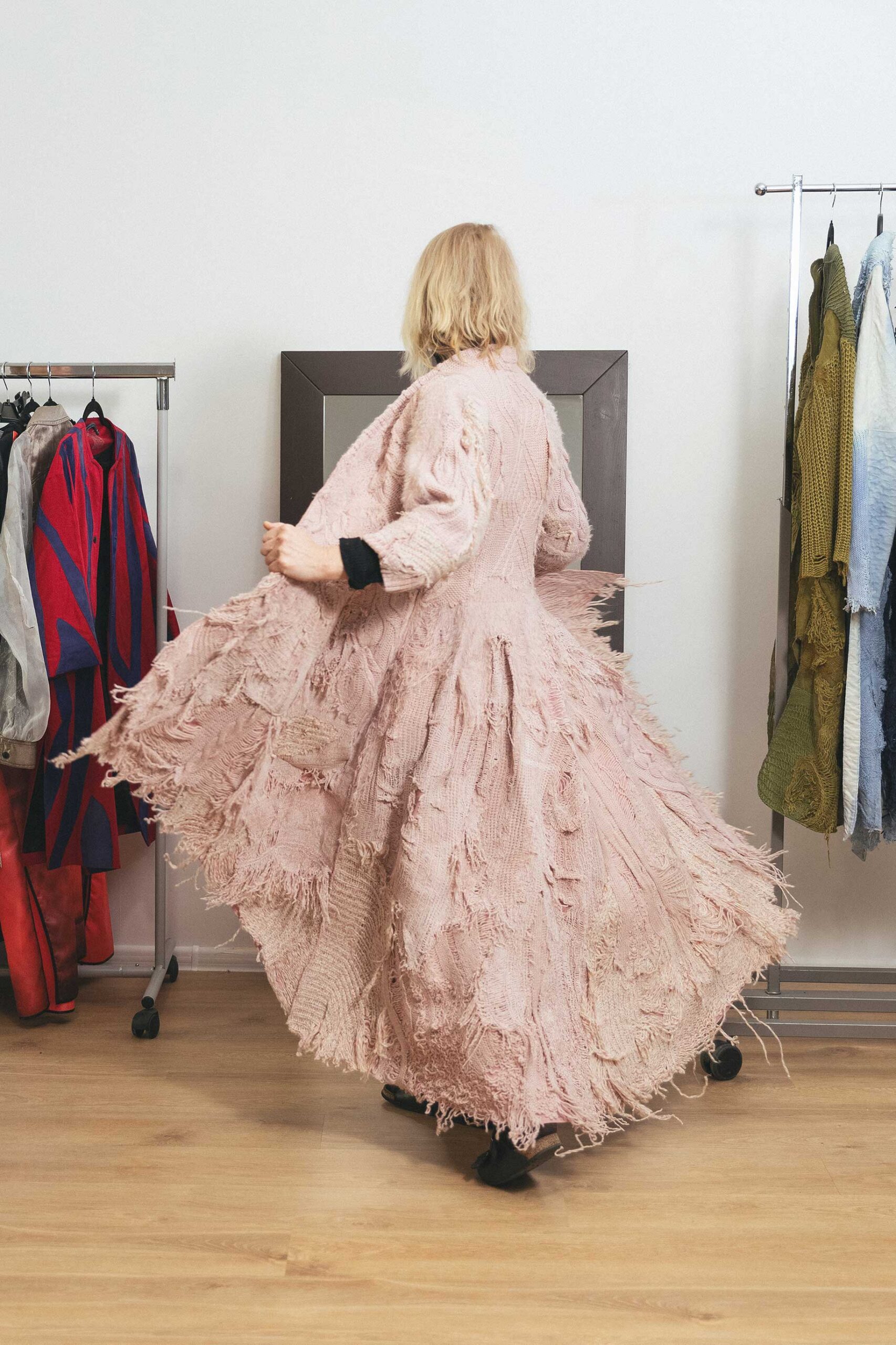
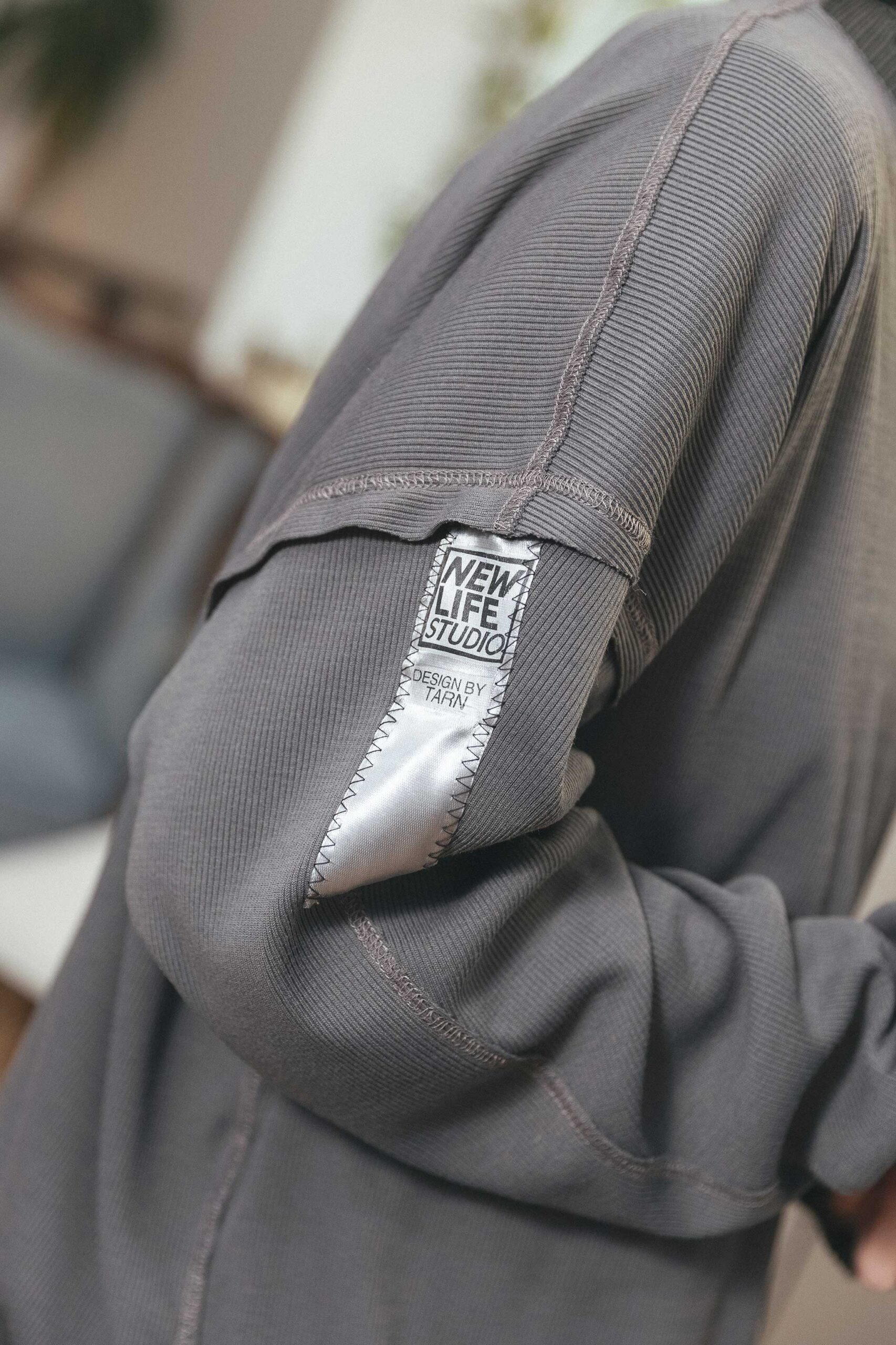
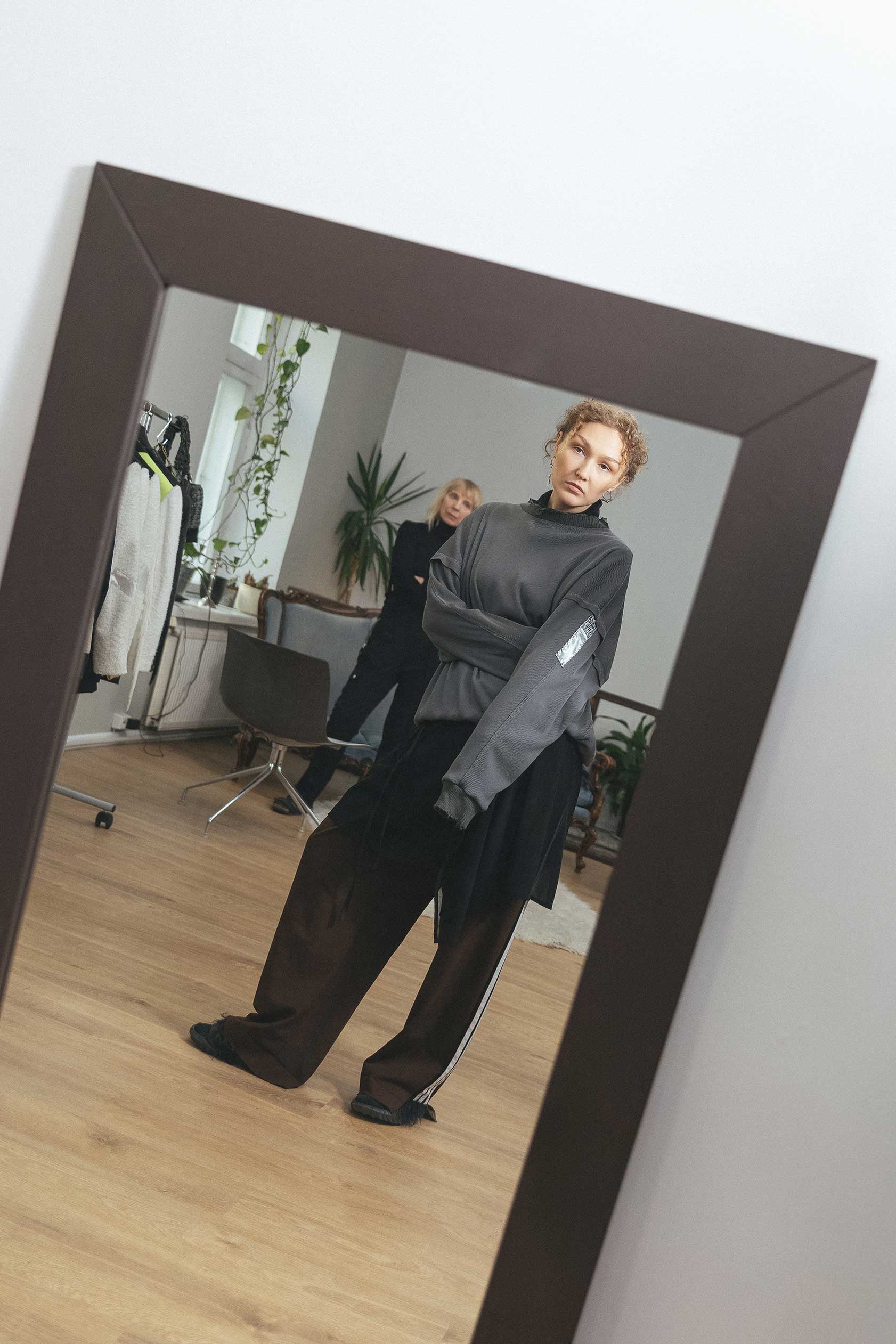
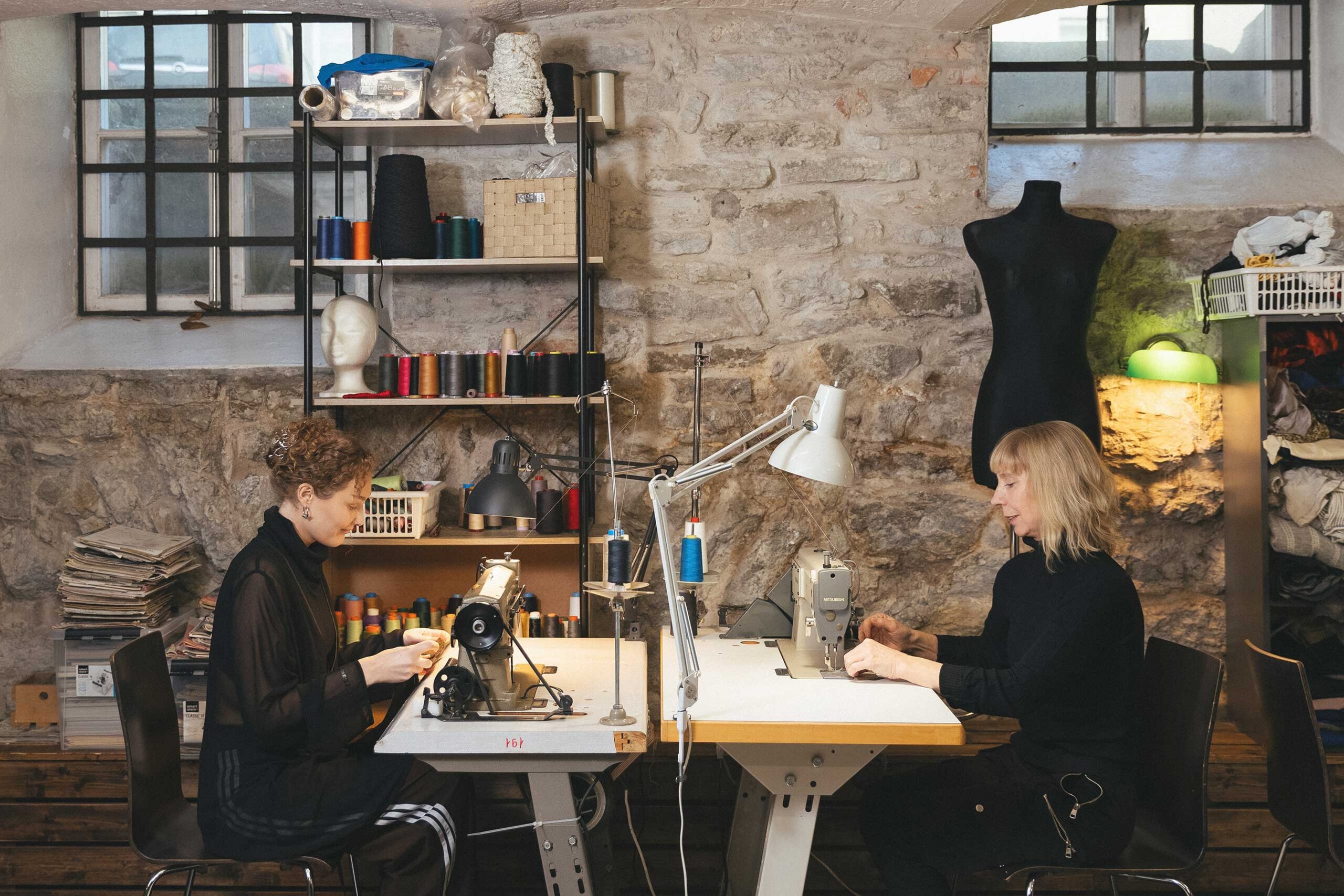
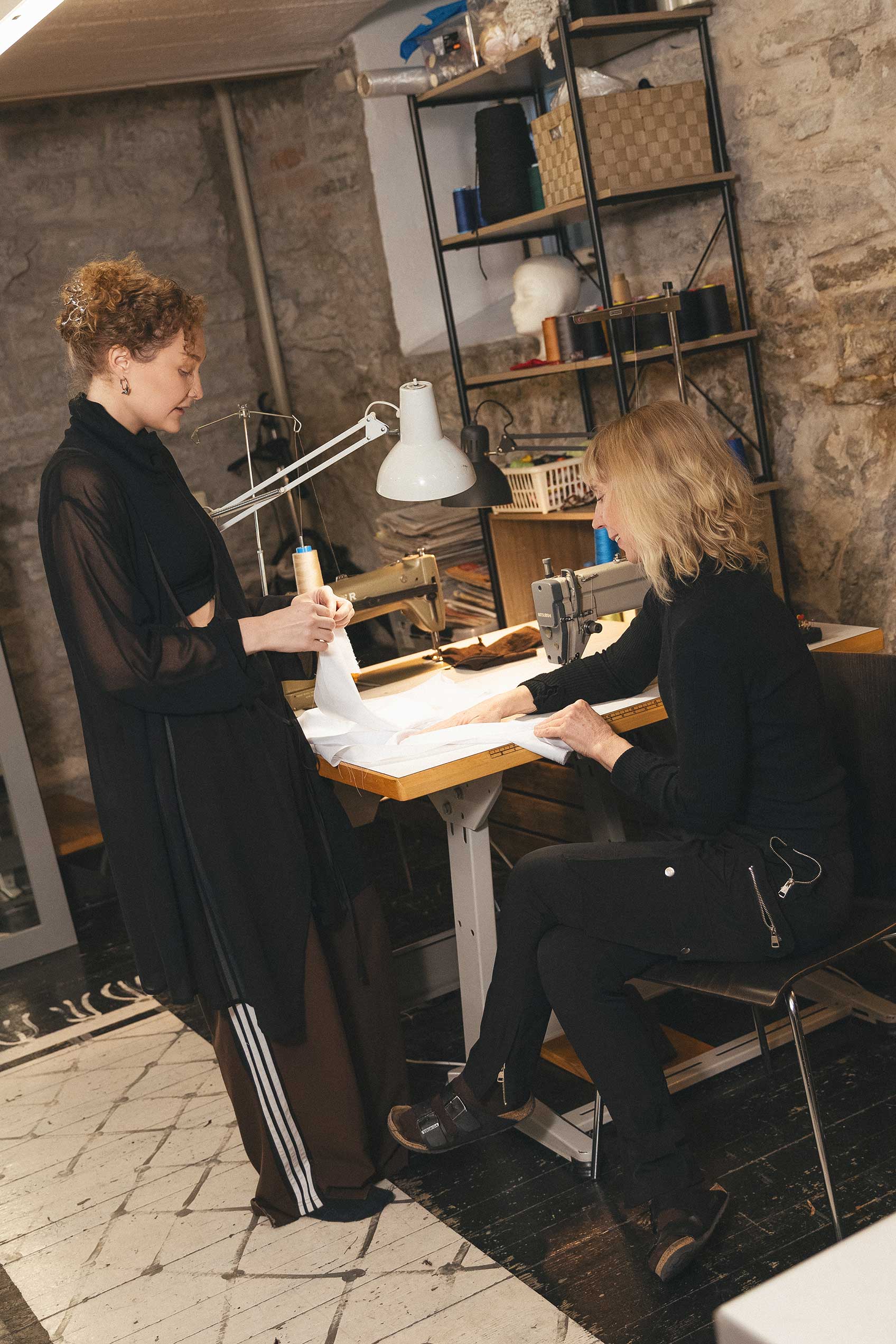
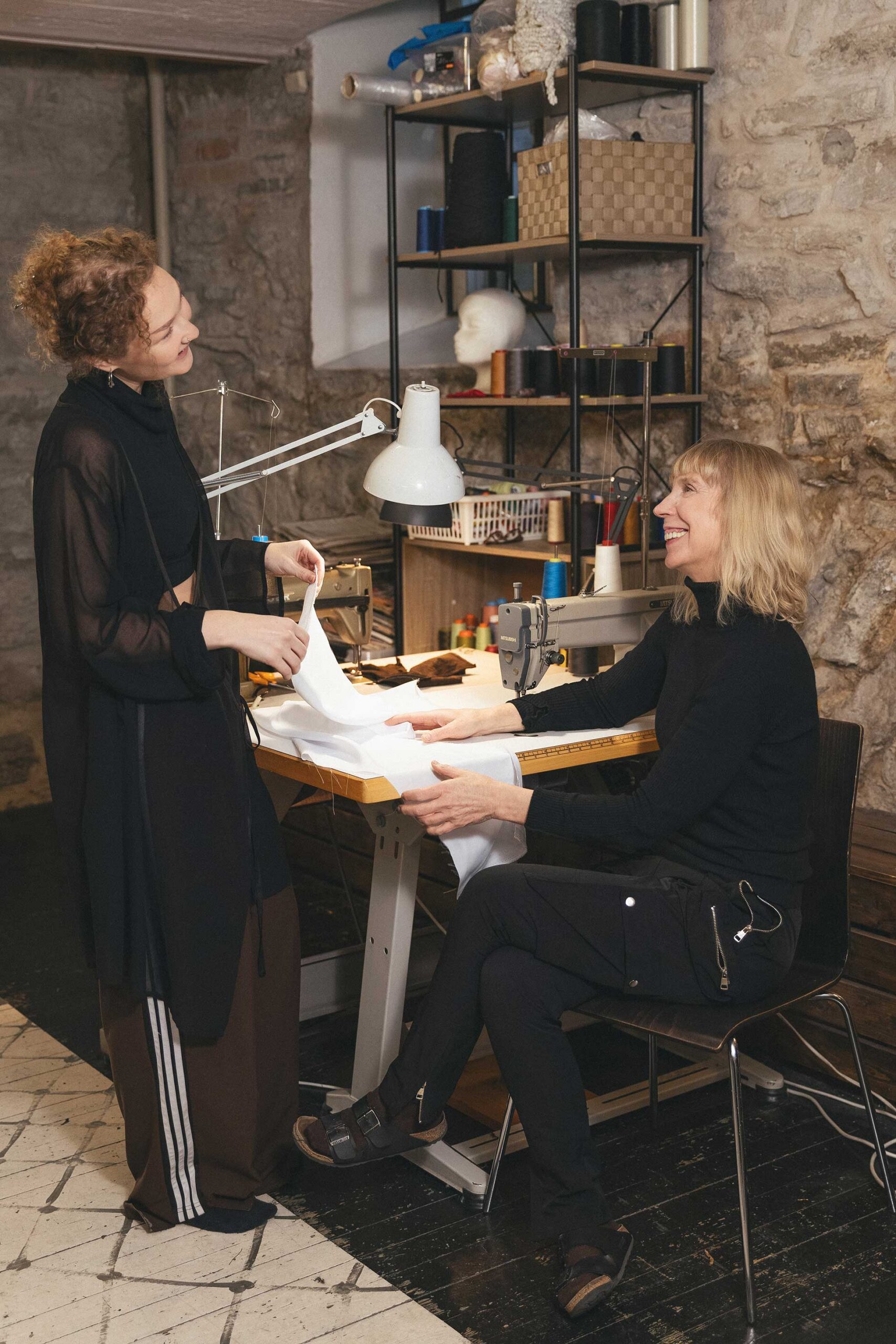
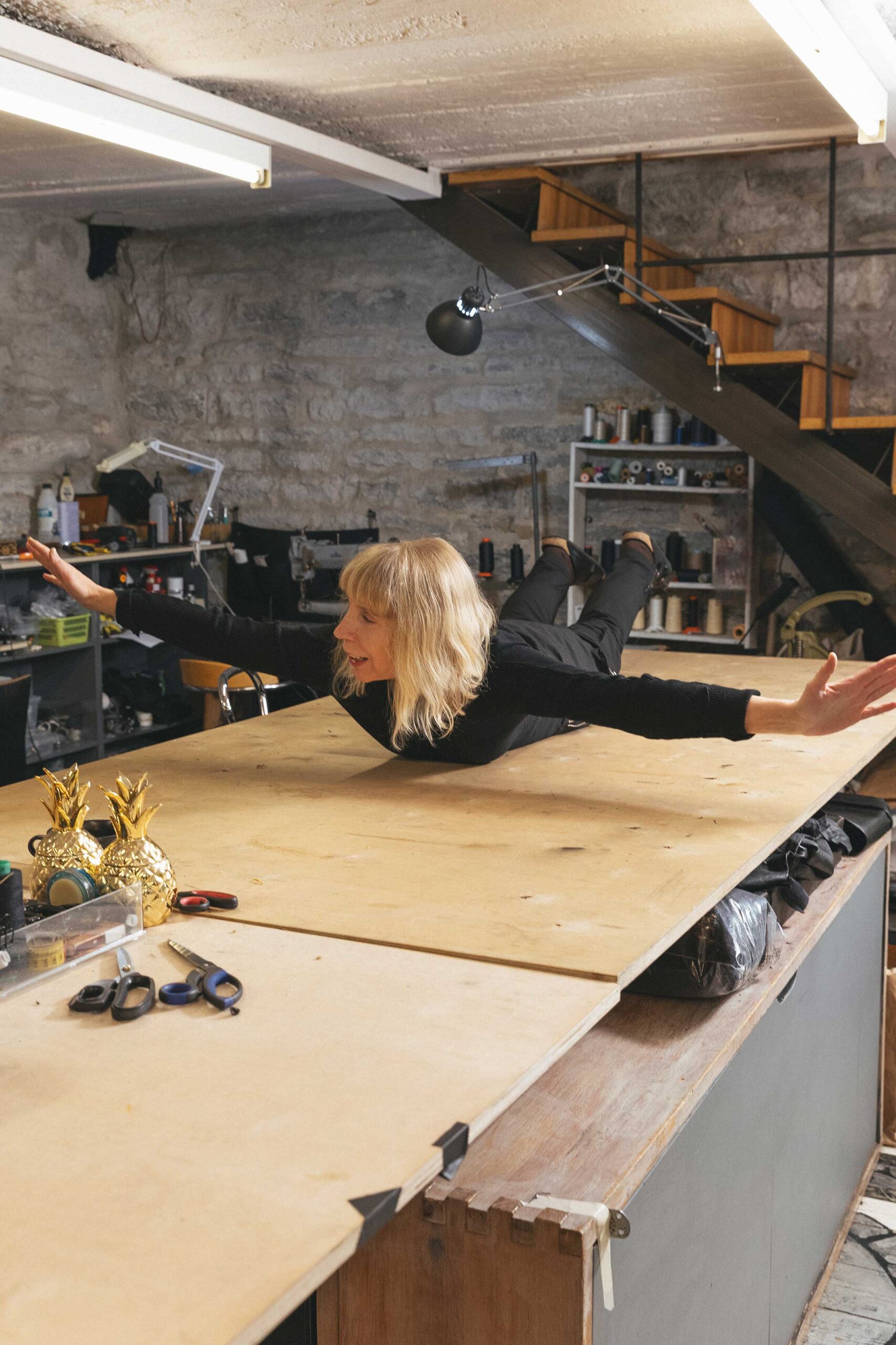
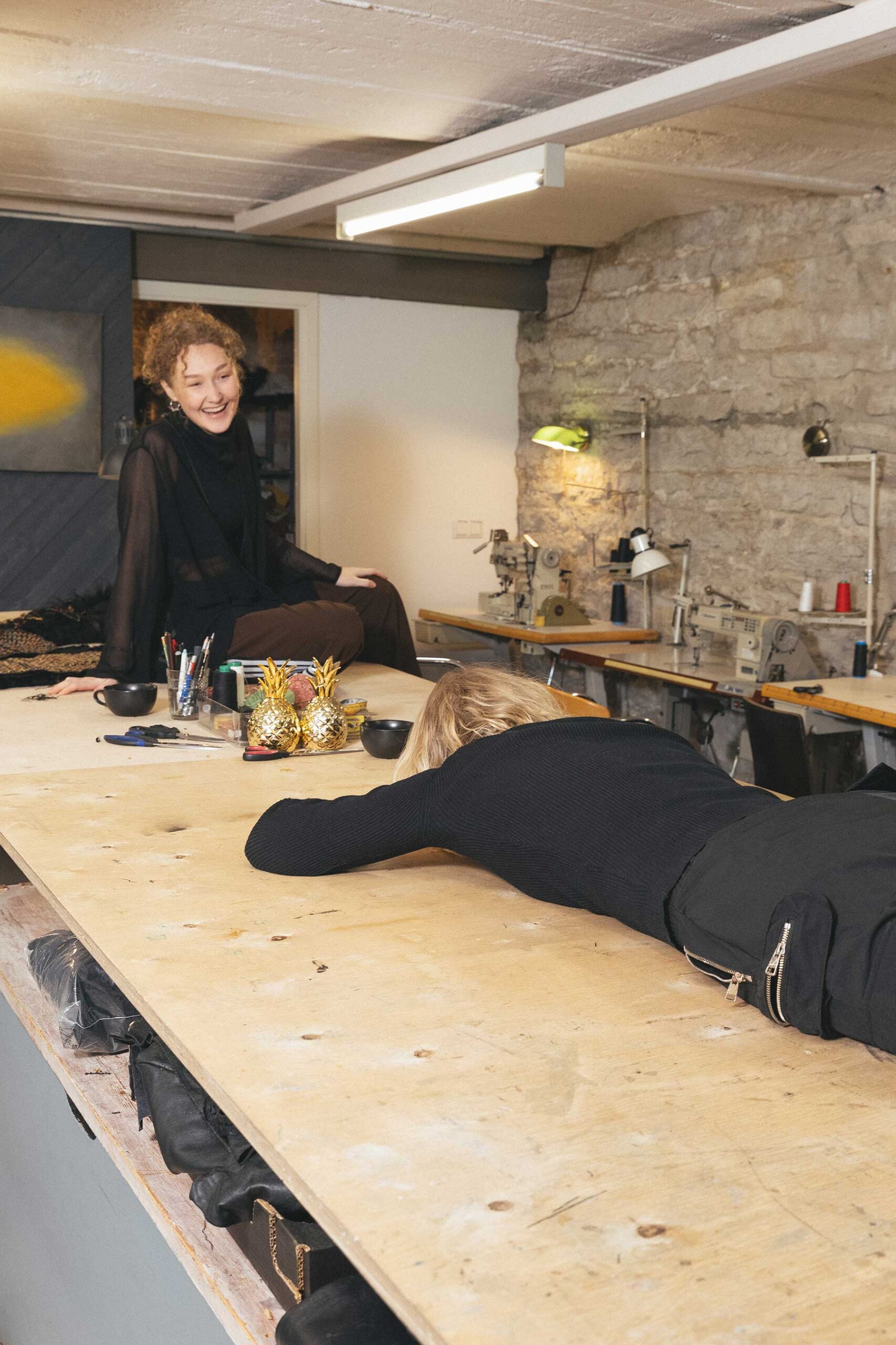
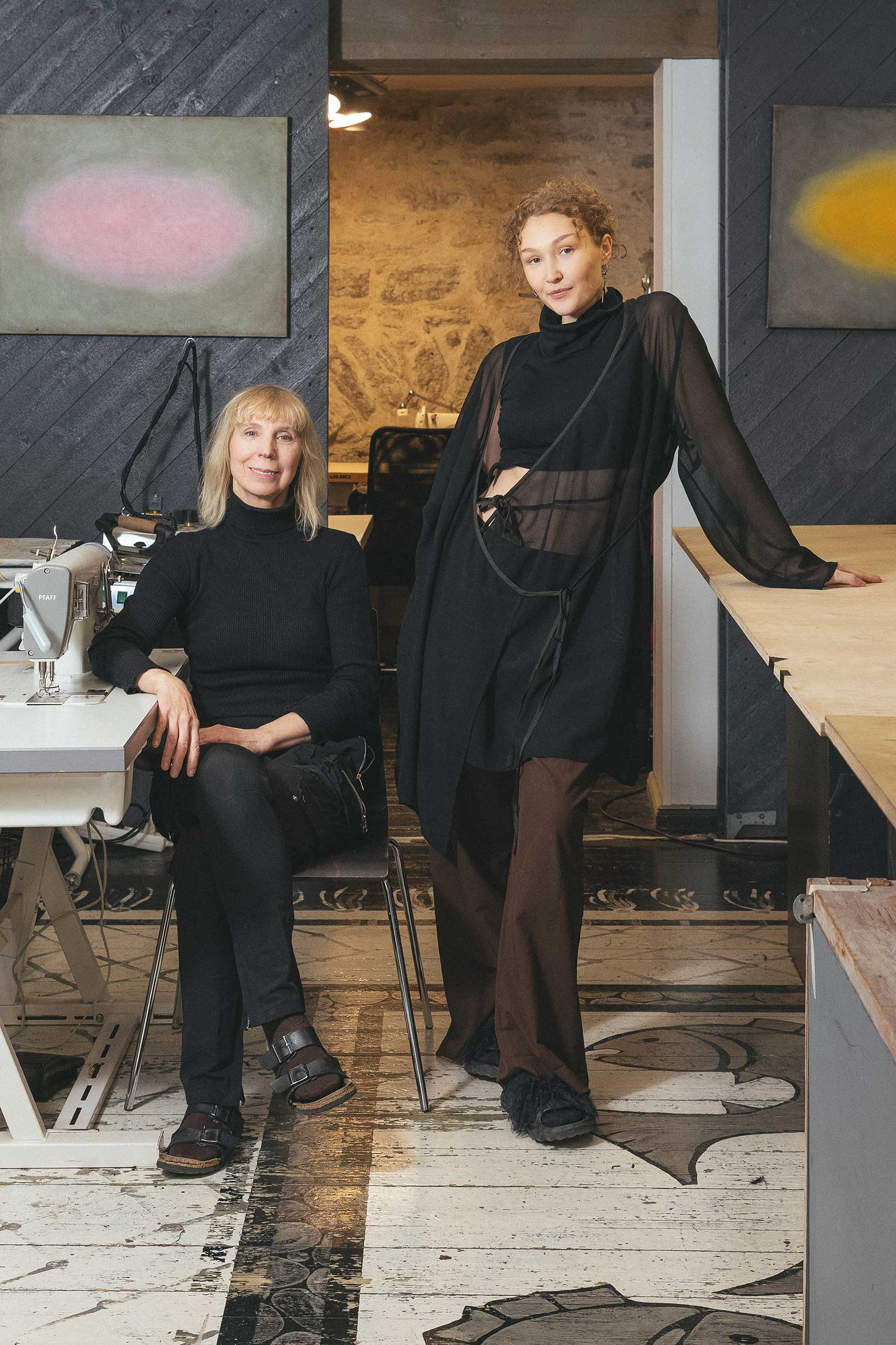
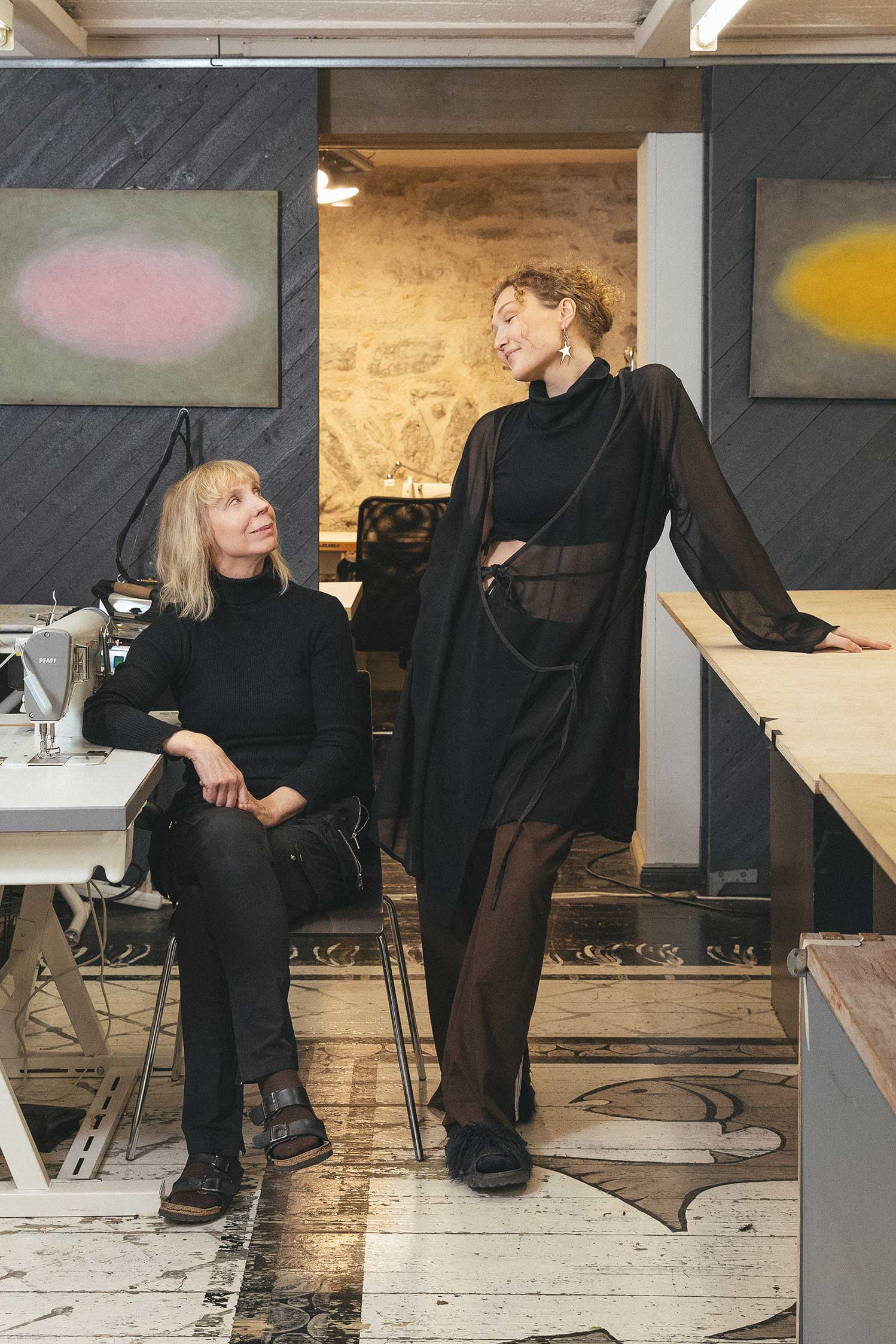
Tuuliki also highlights the more painful side of design – consumption and overproduction. “When I see those piles in shopping malls… it’s hard for me to breathe. And I think, oh no, I’m contributing to all of this as well. It really troubles me, and I’ve often thought that I don’t want to be involved in this at all.” This is precisely why she works exclusively with upcycled materials. “It allows me to work without guilt. Otherwise, I wouldn’t be able to function as a designer.”
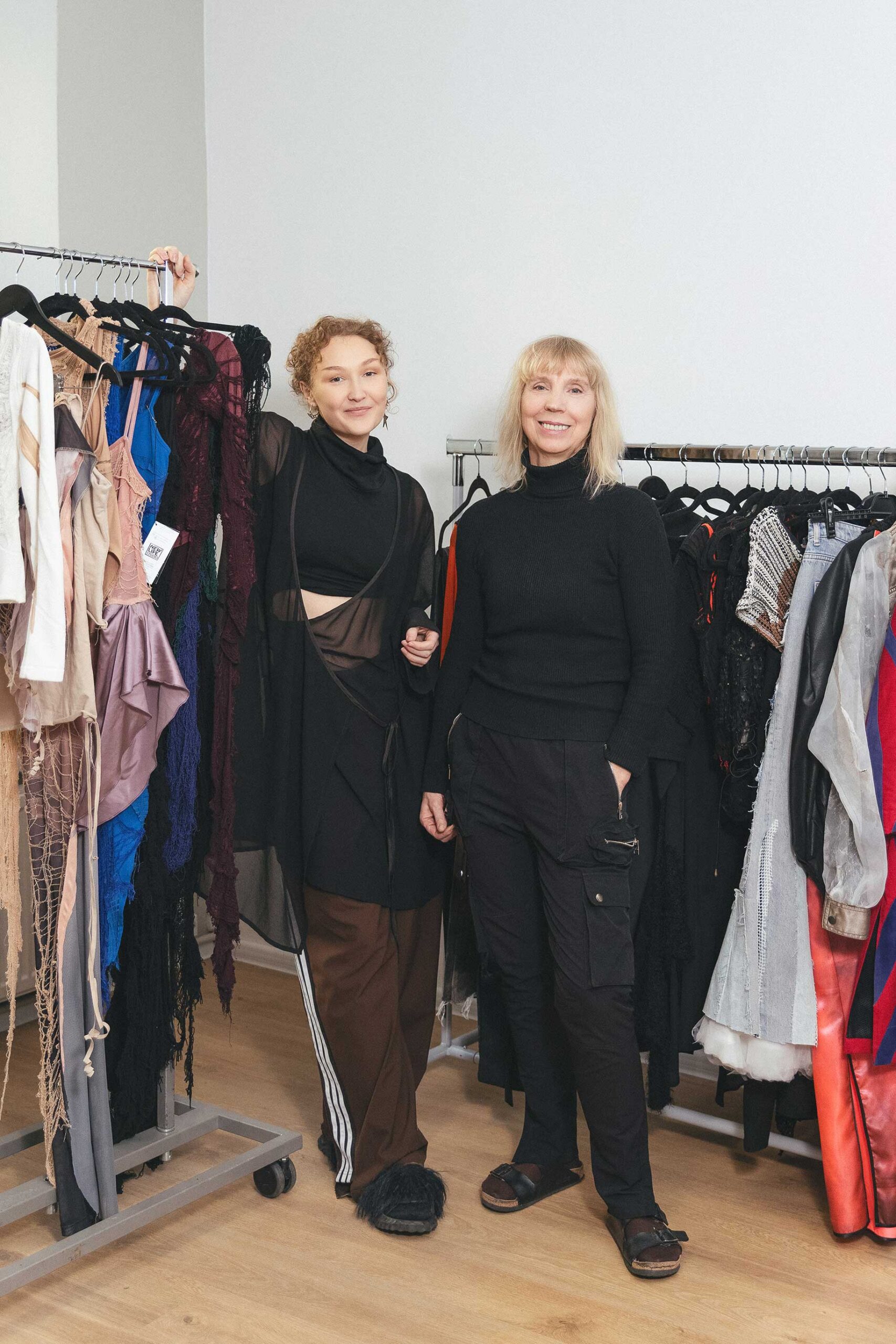
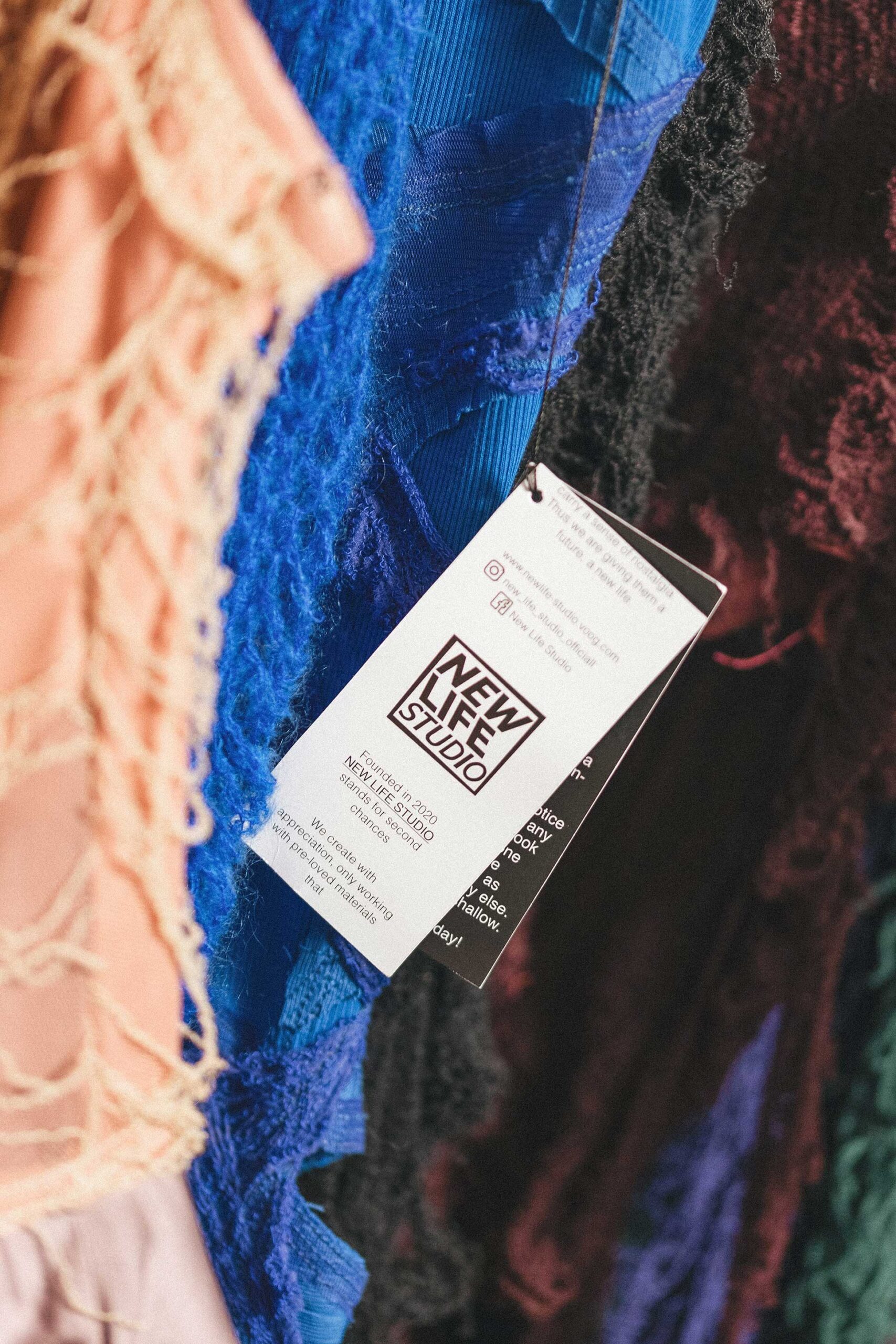
The name New Life Studio encapsulates the brand’s core philosophy. “It’s about giving new life to something that has become worthless to someone else and been abandoned,” Eva Lotta says. “We discover new value in it and give it a new life.”
Although they operate under a shared name, each designer has a distinct signature. According to Tuuliki, material is always at the center of her creative process. “Because I work with upcycling, my signature is very material-driven,” she explains. When she notices an interesting fabric in a second-hand shop, the idea immediately starts to take shape.
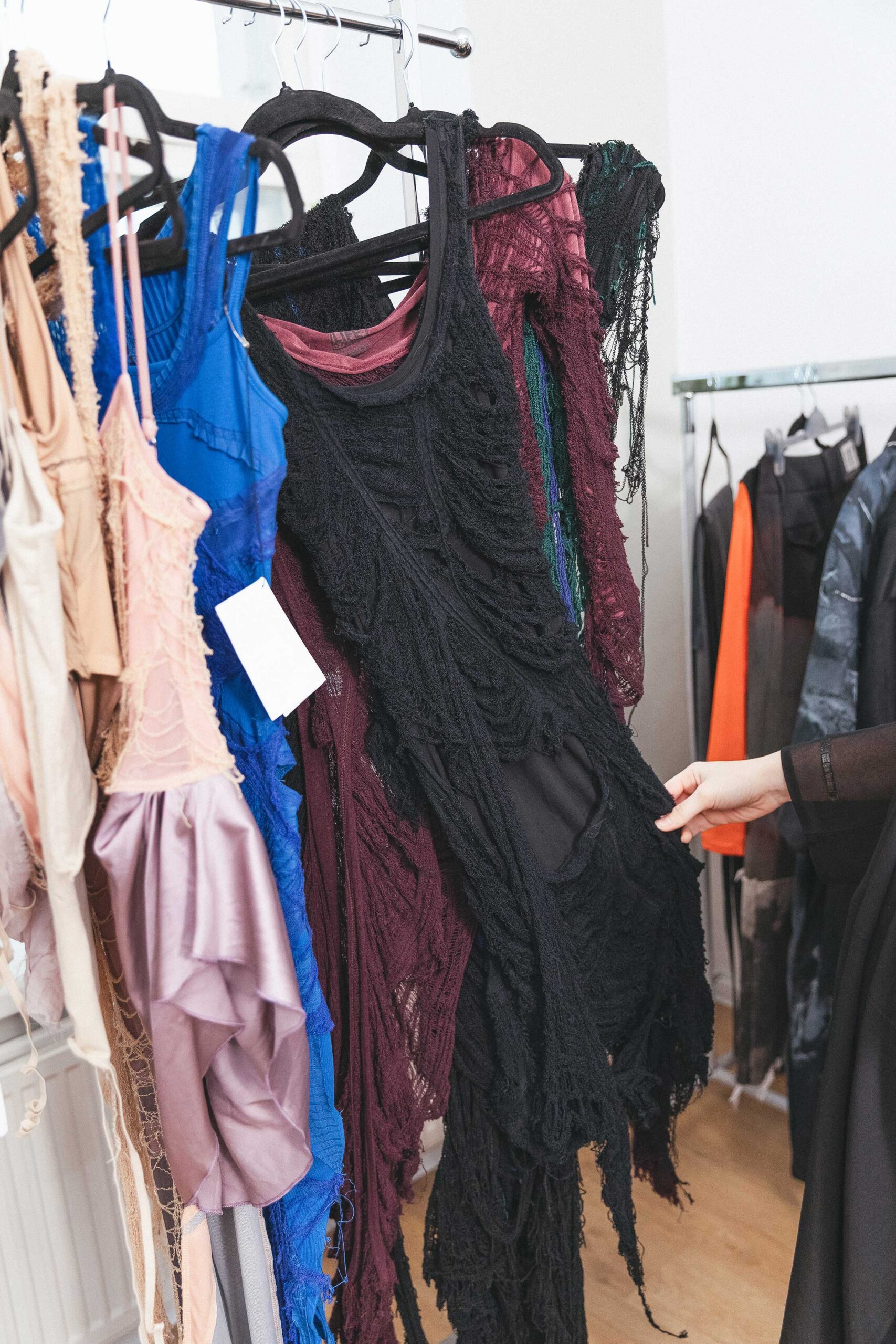
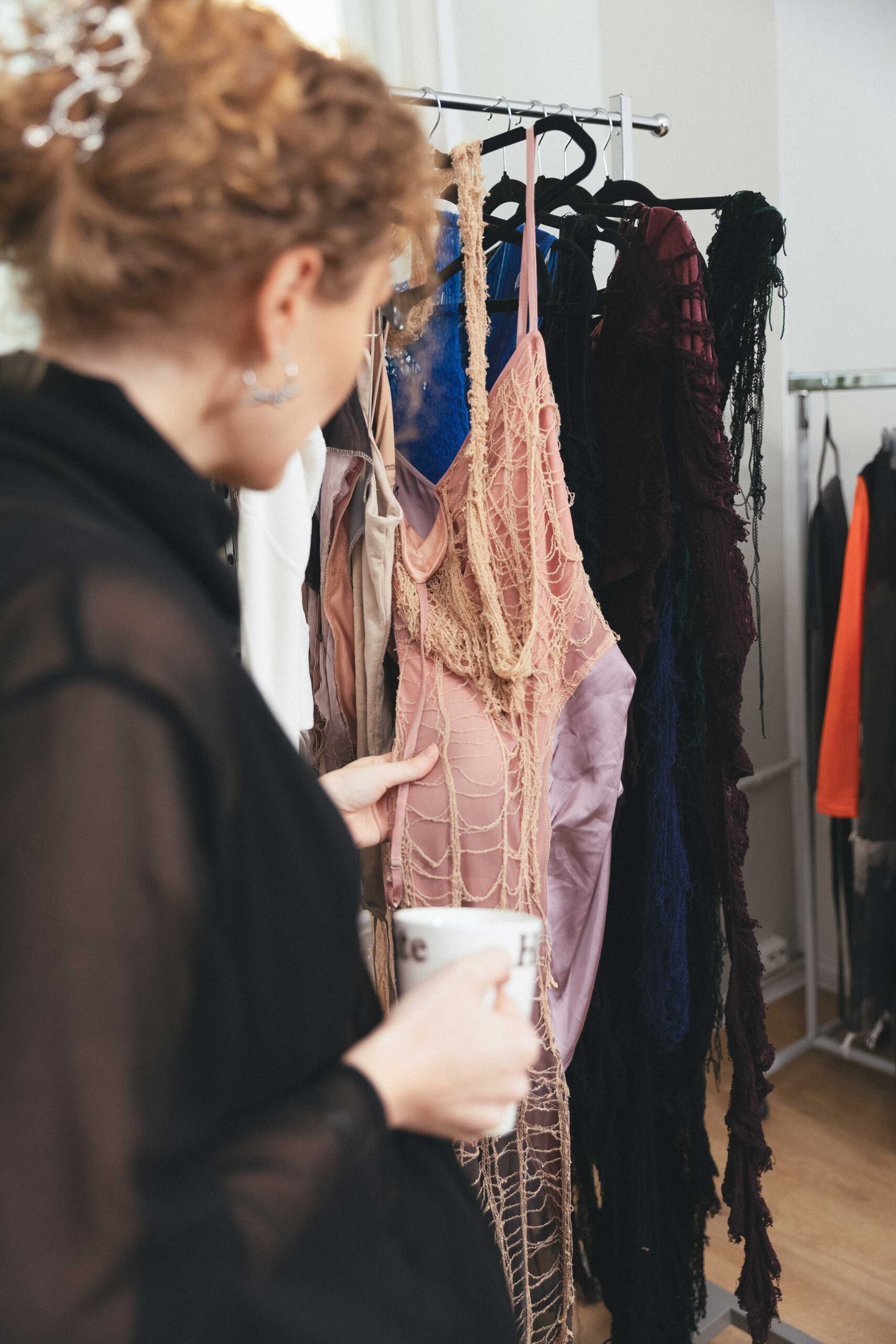
Since upcycled fabrics often come in small pieces, this inevitably shapes the final result as well. “Many items are made from ten different pieces simply because there aren’t three meters of the same fabric available. That’s the reason these pieces are the way they are,” Tuuliki says.
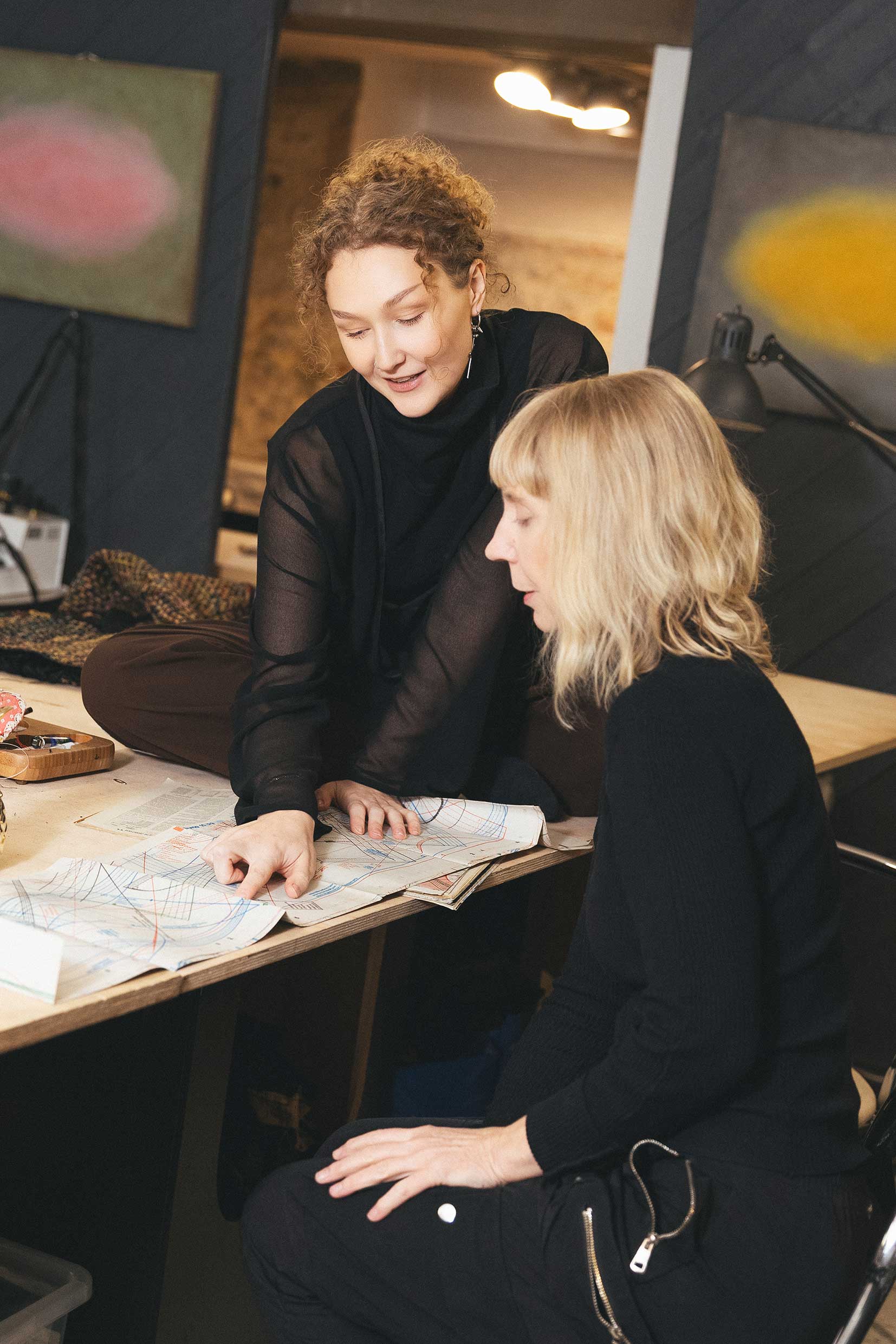
Eva Lotta’s design process, however, is often the opposite – she begins with a clear vision of the final outcome, which then guides the choice of materials. “That makes the process more complicated, especially with custom orders,” she says. “If a client has a very specific wish regarding material or color, it can be extremely difficult to find it second-hand.”
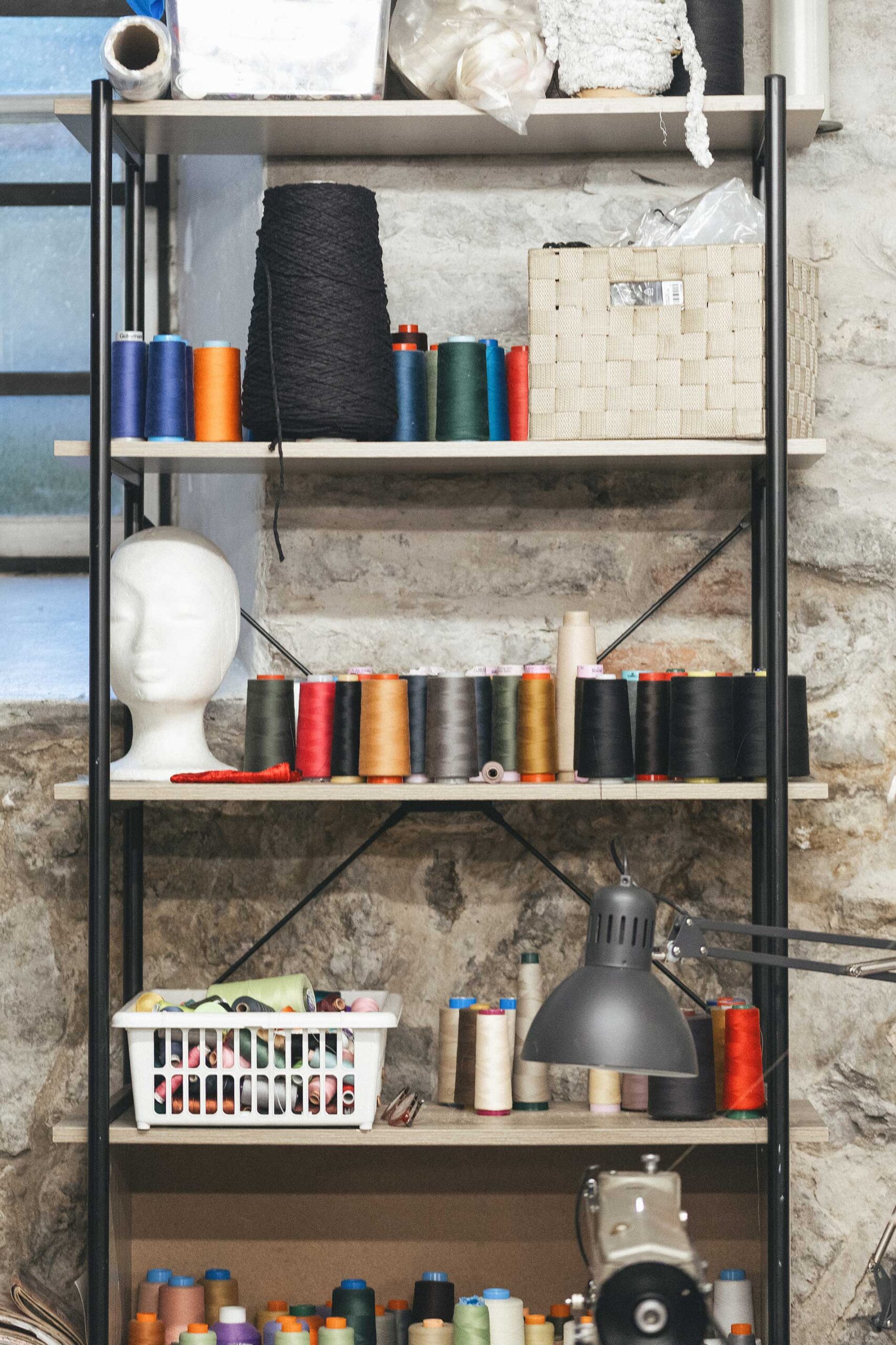
For both designers, sourcing materials is an integral part of the creative process. Tuuliki regularly visits reuse and second-hand centers, where she finds not only clothing but also curtains, tablecloths, and other large pieces of fabric. “Not everything has to be made from old garments – you can find a lot of unused fabric through reuse as well,” she says. Sometimes the search becomes almost like detective work: “If you need to finish a piece and are missing a section of a yellow sweater, you end up visiting ten different shops.” Most of the time, however, they find what they need in their own material stock. “It depends on the project – whether we’re creating for ourselves or working on a commission,” Eva Lotta adds.